Kayseri Sights
Kayseri Archaeology Museum
The city of Kayseri was the geographically easternmost point in our trip. Above Kayseri, Mount Erciyes rises, the nearly four thousand meter peak of a volcano that was once active in geological times. The six-thousand-year old history of Kayseri is evident in the rich collection of Kayseri Archaeology Museum. The museum locates in the castle (Kayseri Kalesi in Turkish). The first objects on display are from five thousand years before, stone carvings of deities.
After comes the Assyrian period: In addition to inscribed tablets, we can see also pottery vessels and small statues from this age. The most impressive was the passage between the Assyrian and the Hittite period: here we can see an enormous Hittite stele carved into a large stone block, the writing on it is very similar to hieroglyps. Other Hittite objects are more similar to the Mesopotamian finds.
The Hittite period is followed by Hellenistic, Byzantine, Seljuk and Ottoman period. Of these, the finds from the Seljuk period were the most interesting for us. We saw Seljuk stars, which were similar to the ones displayed in Karatay Madrasa in Konya, and a founding document of a caravanserai.
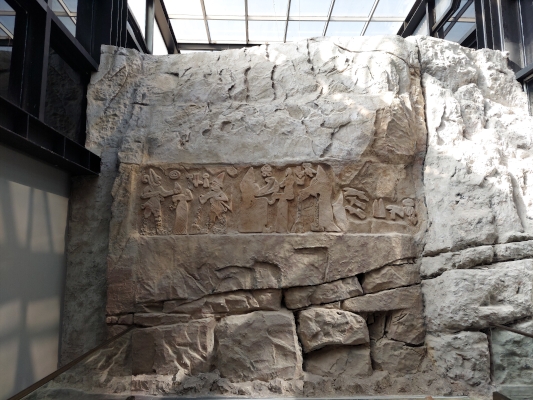
The monumental Hittite stele
Hunat Madrasa, a real hidden gem
The other unmissable place in Kayseri is Hunat Madrasa. Today, there is a teahouse within its walls, we drank Turkish black tea. Visited mostly by locals, Kayseri is not a usual tourist destination, but this is what makes Kayseri interesting for a half-day trip.
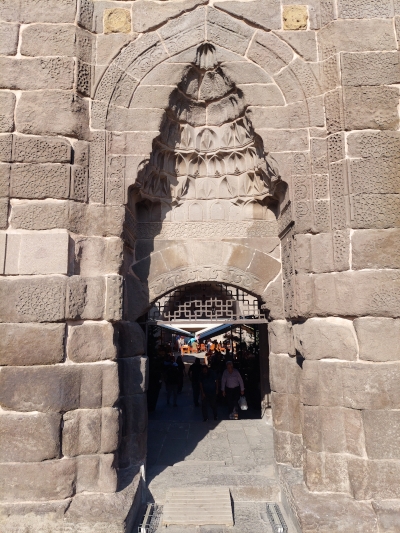
The entracne of Hunat Madrasa
If you like Turkish sweets, Turkish delight in Kayseri is a must! Read more about it here.